Roberto Benavidez
he/him Sculptor Los Angeles, Calif.
About The Artist
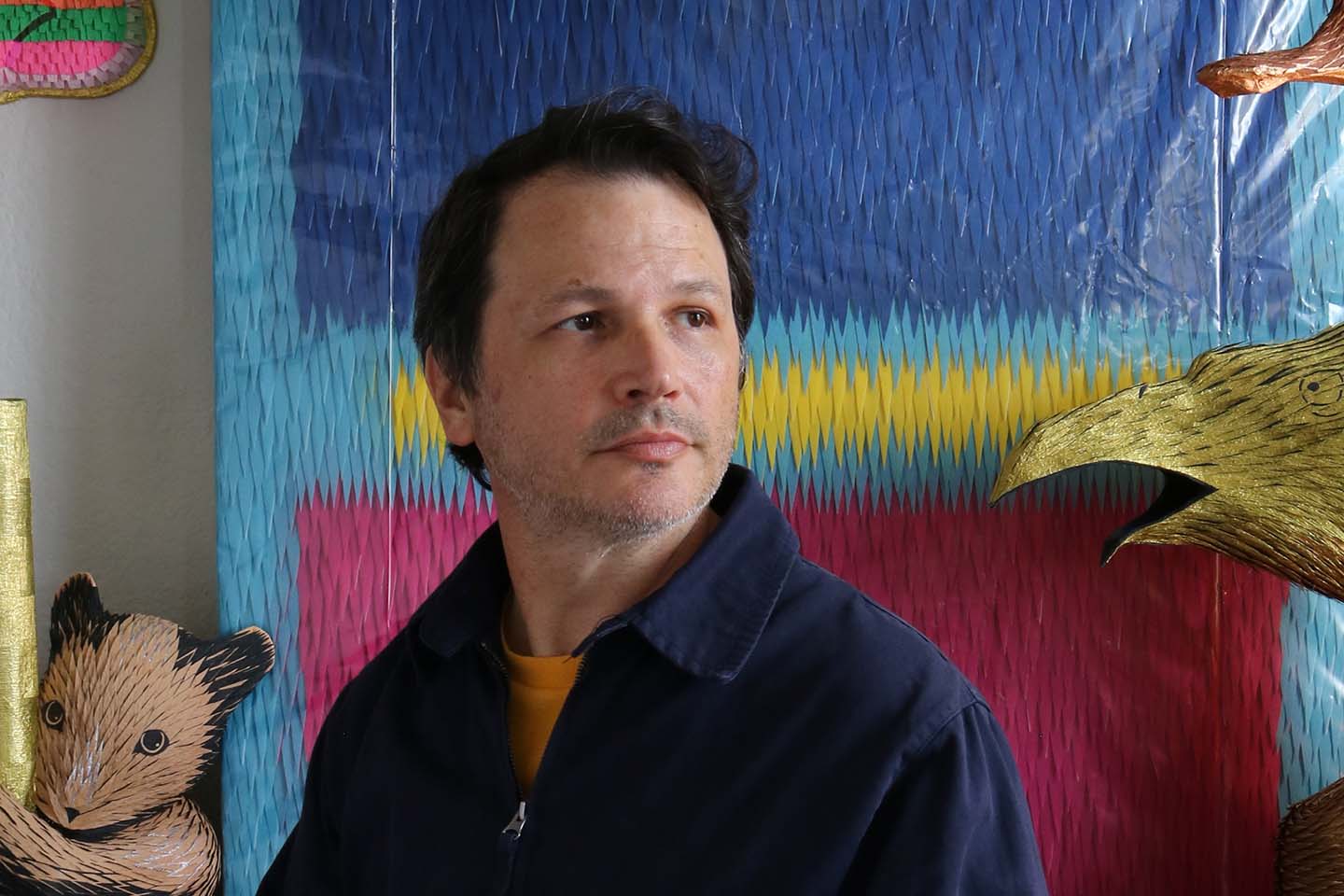
Roberto Benavidez is a figurative sculptor specializing in the piñata form. Originally from Texas, Benavidez moved to California in 2000 and took night classes in bronze casting at Pasadena City College. He later switched to paper, a more accessible material than bronze, ultimately deciding to focus on the piñata technique. He plays with underlying themes of race, ephemerality, beauty and sin, layered with his identity as a mixed-race queer artist and with a focus on impeccable craftsmanship. He exhibited work in the 2024 Homo Faber Biennial in Venice, Italy, and the 2025 Cheongju Craft Biennale in South Korea. The New York Times Series “The Art of Craft” featured his work, which also is in the permanent collections of the Detroit Institute of Arts, LA Metro, The Museum of International Folk Art and the Renwick Gallery at the Smithsonian American Art Museum. He has shown in group and solo exhibitions, including at the AD&A Museum at UCSB, Craft In America, Mingei International Museum, Palo Alto Art Center, Self Help Graphics, Mesa Contemporary Art Museum and Riverside Art Museum. He most recently had a solo exhibition of his Bosch Beasts at Perrotin Los Angeles. The "Play" episode of the Craft in America series on PBS also featured his work. Benavidez lives with his husband and their four cats in Los Angeles.
About The Work
I often use medieval manuscripts and paintings as inspiration for my work. This blending of the piñata form with Western art not only reflects my mixed-race background, but these source materials also serve as inspiration for my paper cutting and fringing technique. My mimicking of painterly and graphic qualities exemplifies the multitude of possibilities one can achieve with paper.
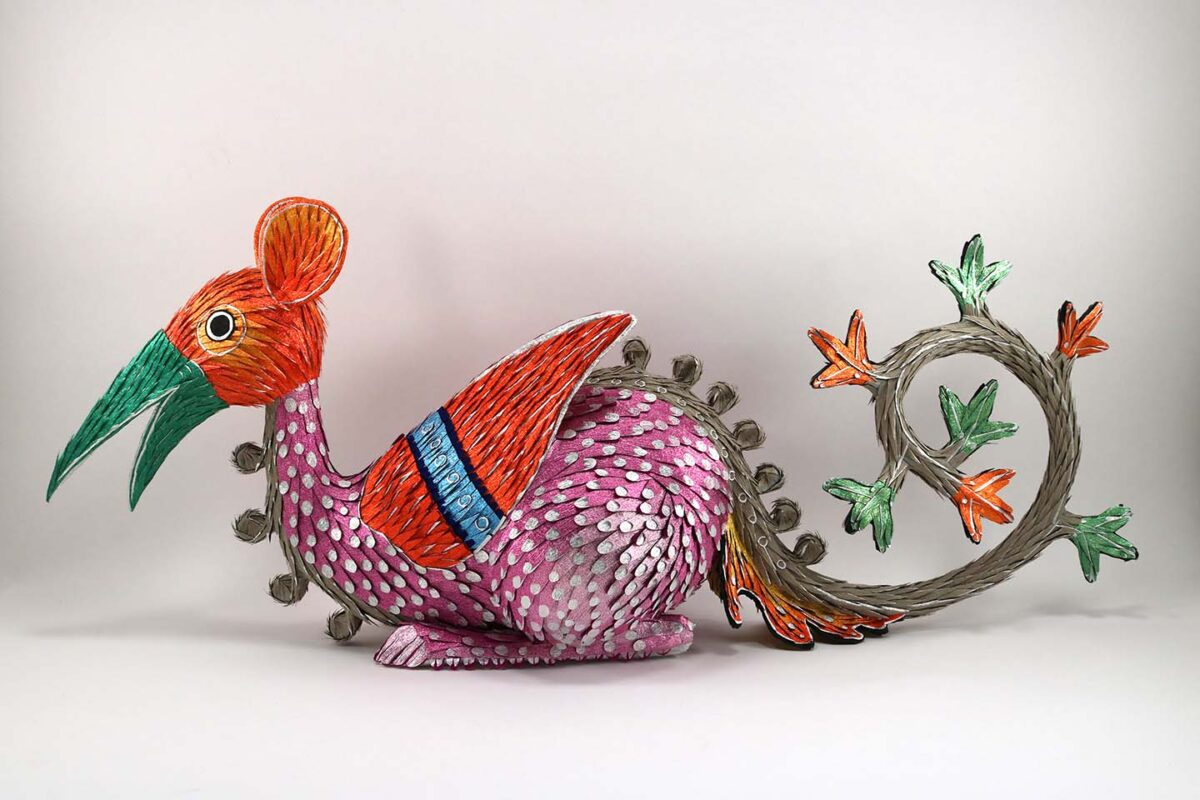
Roberto Benavidez, Illuminated Piñata No. 20, 2024. Paper, glue, wire, tape, paperboard, crepe paper, 15 x 37 11 inches. Photo by Roberto Benavidez.
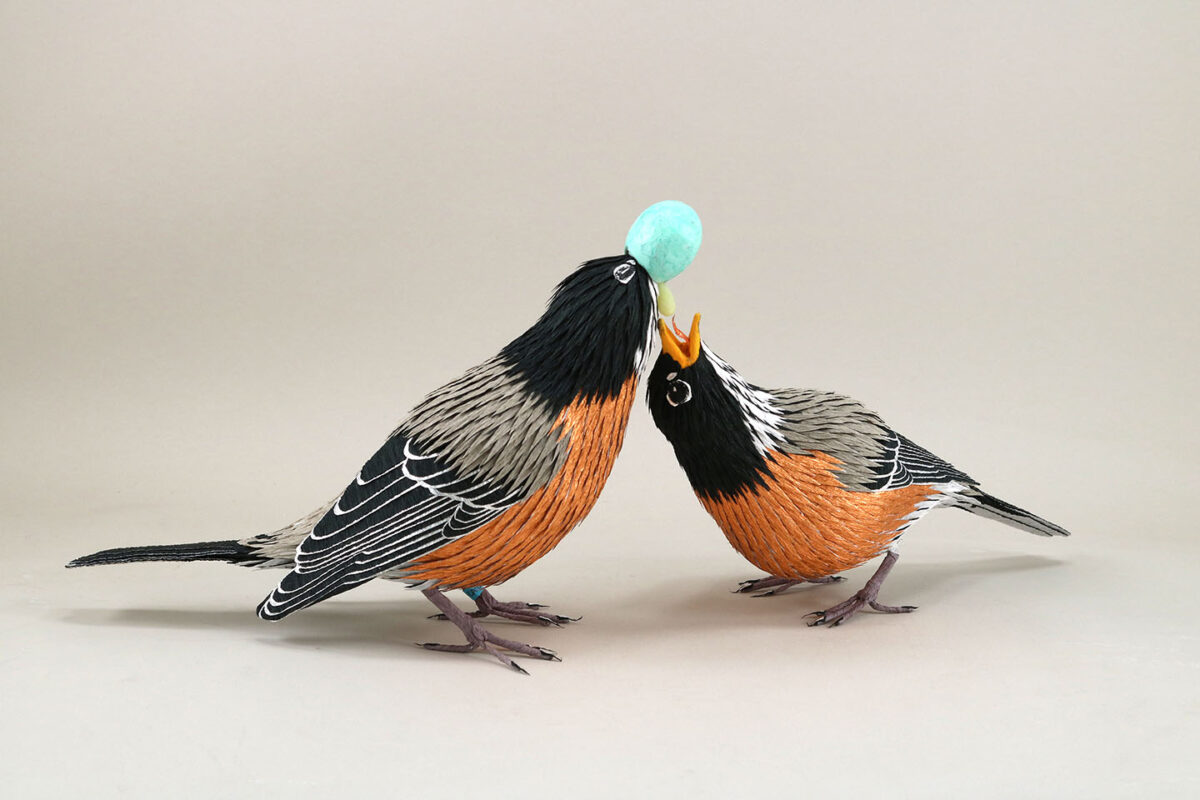
Roberto Benavidez, Comedores de Huevos (Birdr No. 4), 2023. Paper, glue, wire, tape, paperboard, crepe paper, 6 x 16 x 6 inches. Photo by Roberto Benavidez.